




Preloader

Regenerative Fuel Cells

The challenge:

Off‑grid hospitals, universities and industrial facilities rely on diesel generators and fossil‑fuel power, leading to high costs, unreliability and greenhouse‑gas emissions

Solid Oxide Fuel Cells and Solid Oxide Electrolyser Cells (SOFC and SOEC) currently has a high operating temperature of more than 800 ℃. This high SOC operating temperature causes many problems to arise during SOC operations, such as metal corrosion, cell component damage, long start-up times, high electrolytic sintering temperatures, and undesirable interfacial diffusion. High operating temperatures will also make the system require expensive high-temperature materials, resulting in high production costs.

Our Solution

Intelligent Tomorrow has developed SOFCs that work at lower temperatures, so-called intermediate temperature solid oxide cells. We've also developed alternative materials for SOC fabrication process with desired properties at a temperature of 500-800 ℃.

This technology is capable of simultaneously producing heat and power using water and solar energy that makes it an ideal alternative to replace the current fossil-fuel-based hydrogen production followed by electricity generation platforms.

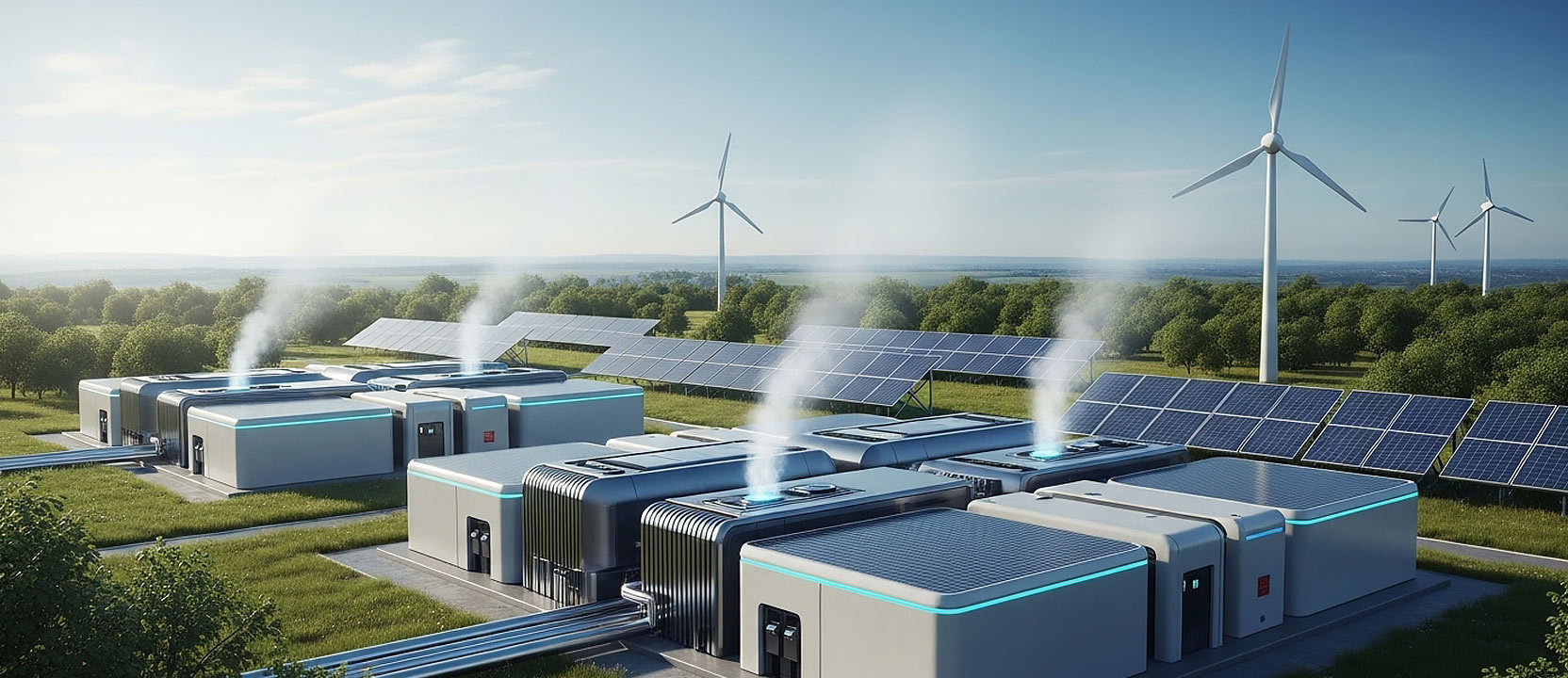
We deploy modular solid‑oxide fuel cells (SOFCs) and solid‑oxide electrolyser cells (SOECs) that store renewable electricity (from solar or wind) and convert it into green hydrogen, electricity or heat.

We manufacture ReGen‑Power cells—co‑generators that integrate SOFC and SOEC technologies. Laboratory demonstrations show electrical efficiencies above 70 % and combined heat‑and‑power efficiencies over 90 %, with no combustion.

Units range from 5 kW to 100 kW and can be scaled by stacking modules

Benefits

List
Enviromentally Friendly

Environmentally friendly and absolutely zero-emissions if the reduction unit is integrated with renewable electricity supply such as wind, solar, and hydro power

List
High Efficiency

Novel ionic activators improve cell efficiency, thereby reducing energy consumed and associated operating costs

List
Flexibility

Units supply electricity, heat or hydrogen and are suitable for hospitals, universities, data centres, EV charging stations and residential communities

List
Reduced Maintenance

Robust design allows thousands of cycles without significant degradation

Current Status & Roadmap

Intelligent Tomorrow's marketing strategy is designed to ensure selling up to 500 units between £26,000 to £35,000 for output 1.5 kWh in year 2. However, ReGen-Power cells from 5 kWh to 20kWh are in development.

Intelligent Tomorrow is working with its technology development partners FLUOR and Strata Technology to decrease the risk and take the technology to market effectively. Know-how and patents are applied for during the process. It is expected that various manufacturing patents will be registered for manufacturing these innovative highly efficient ReGen – Power cells.

Once accredited it is expected that these regenerative storage systems will be produced by Intelligent Tomorrow Group Ltd manufacturing plant in a free economic zone.

In parallel of testing in commercial situations the ReGen- Power cells in the UK, Intelligent Tomorrow’s Indian partners will install the ReGen- Power cells at industrial sites to showcase the UK innovation and market the fuel cells directly into the transport and housing markets. Accreditation for the SOC for the Asian market will be applied for. Cooperation with car manufacturers and constructions firms will be established in the UK and India.

Intelligent Tomorrow Group is reaching an agreement to work with West Sussex County Council owned Solar farms and install a pilot ReGen- Power cell to use the hydrogen and/or electricity produced for heavy duty transport vehicles or for use to store power for regular release at Shoreham harbour or for a large school . These showcase projects will be very valuable showcase studies to confirm the safety and versatility of these innovative distributed regenerative storage system. A cross-departmental hydrogen strategy has been developed within the UK Government for hydrogen production, storage, and distribution projects, aiding the introduction of new technologies.